
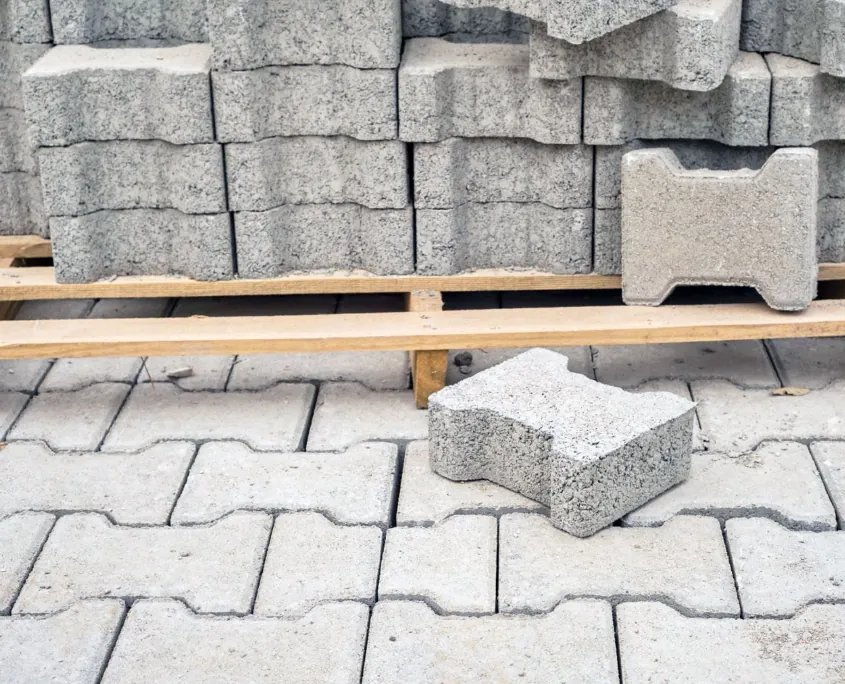
What determines the life of an interlocking paver is not the stone itself but the layers beneath it. Correctly laid paving holds its level for decades; the same stone laid on unprepared ground settles and undulates after the first winter.
The logic of the layers: the stone on top, the work underneath
A paved surface is built not from the top down but from the bottom up:
- Prepared subgrade. Topsoil is stripped and the ground compacted.
- Sub-base. Granular material is placed and compacted in layers. The thickness is determined by the traffic that will pass over it: a footpath and a yard with lorry traffic are not built to the same section.
- Sand bed. The thin, evenly screeded layer the stones sit on.
- Paving stones. Laid according to the pattern.
- Jointing sand. Fills the gaps between the stones and provides the interlock.
The sand bed: the layer where most mistakes are made
The sand bed is not there to correct irregularities in the ground but to seat the stones at an even height. Three common mistakes:
- Laying it too thick. Excess sand squeezes sideways under load; the stones settle and the surface undulates. The bed is screeded thin and even.
- Compacting it. The sand bed is not compacted before the stones are laid; it is compacted together with the stones by plate compactor afterwards.
- The wrong material. Sand containing clay and fine dust turns to mud when wet. Washed material of suitable grading is used.
Jointing sand and interlock
What makes interlocking paving “interlock” is the sand in the joints as much as the shape of the stone. Until the joints are filled, the surface carries no load: the stones move individually and their edges chip.
Jointing sand is swept into the gaps and settled by passes of the compactor. Some drop in the joints during the first months is normal; topping up the jointing sand once more after handover is therefore good practice.
Edge restraint: paving without kerbs spreads
If the paved area is not restrained at its edges, it spreads sideways under traffic and the joints open. Edge restraint is therefore not an optional decoration but part of the system.
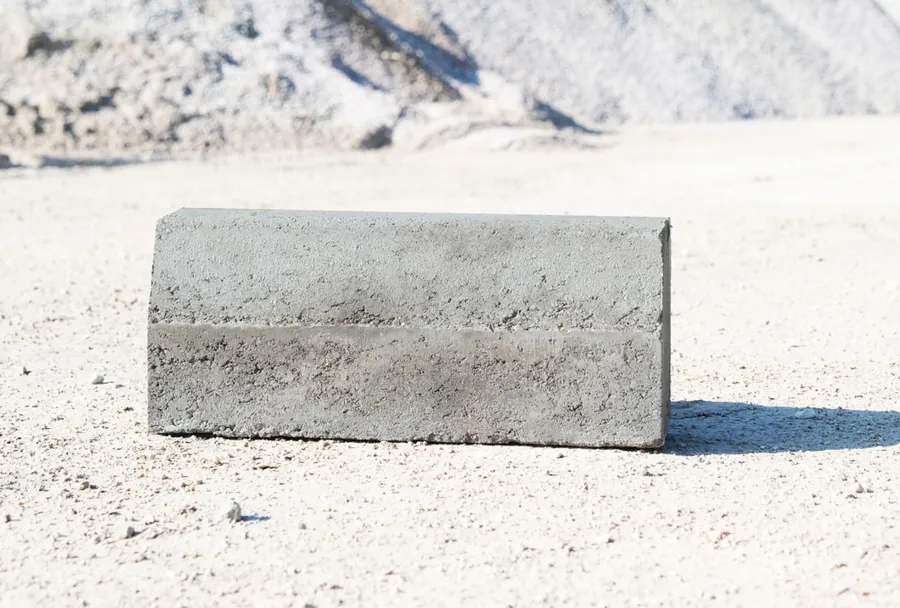
- The edge is formed with kerb stones or a concrete edge beam.
- The kerb is supported from behind with a concrete haunch.
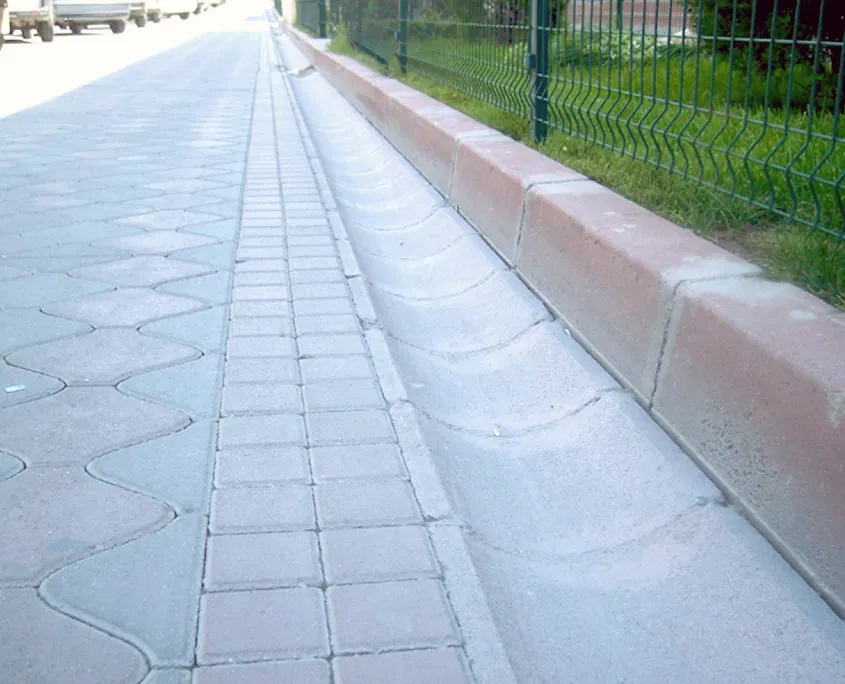
- A fall is planned for water run-off; paving does not hold water, but water collecting in the layer beneath reduces its bearing capacity.
For product selection, see the interlocking paver and kerb options on our products page.
Why does paving settle?
- Sub-base insufficient or not compacted.
- Sand bed laid too thick.
- No kerb at the edge; the surface has spread sideways.
- Backfill over a service line badly compacted — the trench line settles over time.
- Surface water not drained; the subgrade has softened.
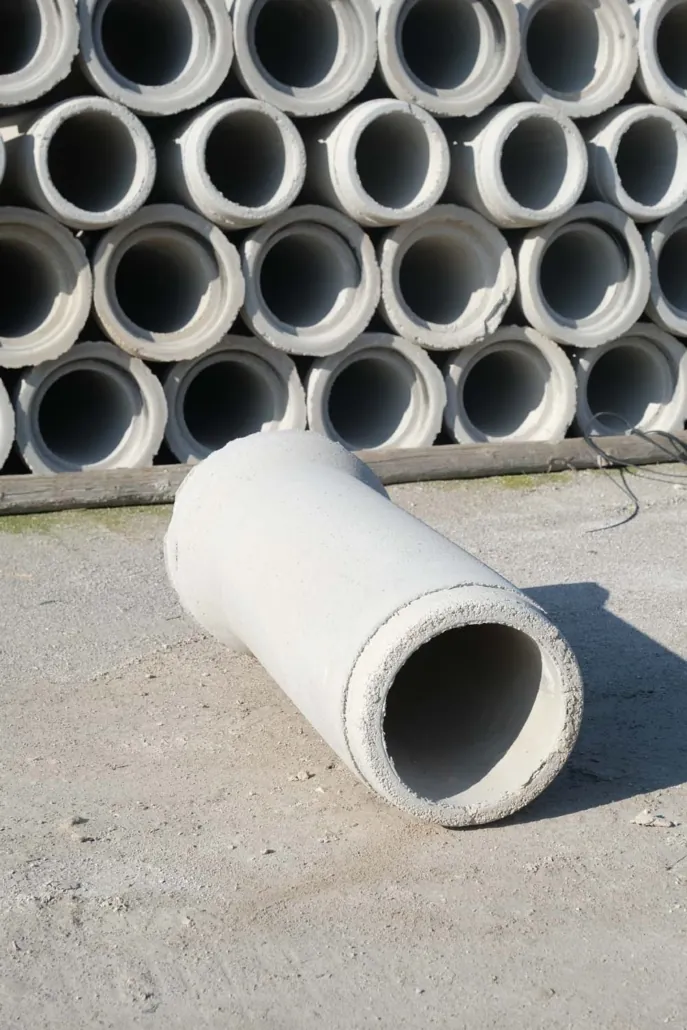
What all five have in common: the problem is not in the stone but beneath it. Where service lines run underneath, see also the trench rules in our laying concrete pipes article for compacting the backfill in layers.
Frequently asked questions
What thickness of interlocking paver should be chosen?
Thickness is determined by the traffic that will pass over it. Different thicknesses are used for pedestrian areas and for areas open to cars and heavy vehicles; it should be chosen according to the design and intended use.
Is concrete poured under pavers?
In standard practice, pavers are laid on a compacted granular sub-base and a sand bed. Laying on a concrete base is a separate detail and requires a drainage solution.
Why does the jointing sand diminish?
In the early period the sand settles into the gaps under traffic and rain. This is normal; topping up the joints once more is recommended.
Can a settled area of paving be repaired?
Yes. The advantage of interlocking paving is that it can be lifted and relaid. In the settled area the stones are lifted, the layer beneath is corrected and compacted, and the same stones are reused.
Related articles
Guide to Building Walls with Pumice Blocks: From Selection to Render
What Is a Hollow Block Floor System, and Where and How Is It Built?
Choosing the Strength and Load Class of Concrete Pipe: What to Check in the Design
Kerb Stone Types and Laying Rules: What to Watch on Site
Stormwater Drainage: Channels, Grating Classes and Ditch Elements
Manhole (Inspection Chamber) Elements and Installation: From Base to Cover
Laying Concrete Pipes: Trench, Bedding, Seals and Joints
Let us prepare a product and delivery plan for your project
Contact our plant management for stock availability, size options and a price quote. Same-day delivery from our facility at the centre of the Milas–Bodrum axis to Milas, Bodrum, Muğla, Didim and the surrounding areas.