
Choosing the Strength and Load Class of Concrete Pipe: What to Check in the Design
The choice between unreinforced and reinforced concrete pipe, the effect of cover depth and traffic load, the contribution of the bedding type to load capacity, the relationship between diameter, wall thickness and class, and the consequences of choosing the wrong class.
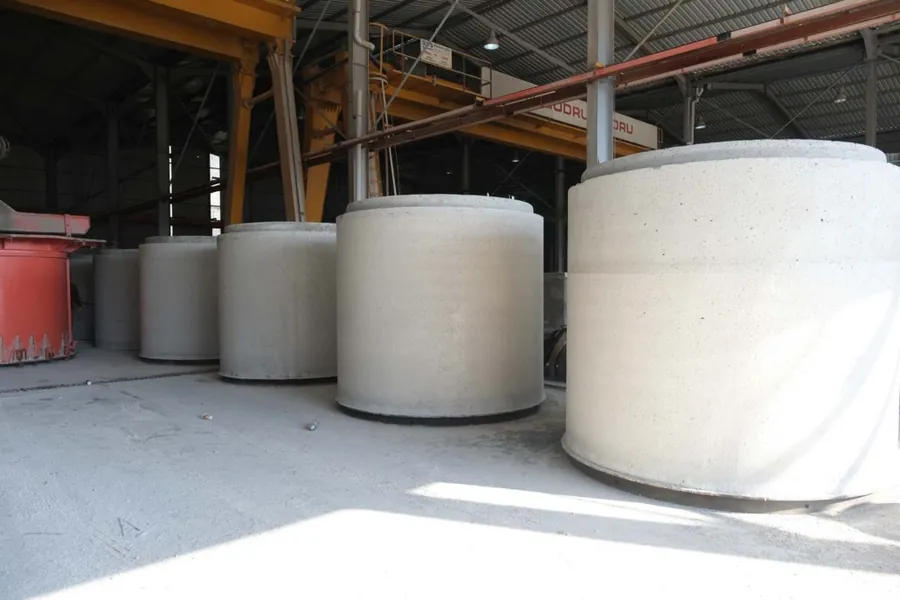
The number talked about most on an infrastructure line is the diameter; yet the number that determines how many years the line will last is the strength class. A concrete pipe carries the weight of the soil above it, the traffic passing over the surface and the demands arising from the settlement of the fill, all at once. Two pipes of the same diameter carry completely different loads because their wall thickness and reinforcement differ; and the same pipe behaves differently when laid on a different type of bedding. The right choice is therefore not made by looking at a single table, but by assessing cover depth, traffic load, trench geometry and bedding type together. In this article we explain how concrete pipe works under load, when to choose unreinforced and when to choose reinforced concrete pipe, and exactly what to check in the design.
How Does a Buried Pipe Carry Load?
A buried pipe carries the soil above it not on its own like a column, but as a system working together with the surrounding ground. Just as important as the magnitude of the load is the width over which, and the way in which, it is distributed onto the pipe. Four factors determine the load reaching the pipe:
- Fill load: The weight of the soil above the pipe. It increases with cover depth. But this relationship is not a simple multiplication; in a narrow trench the trench walls carry part of the load through friction, while for a pipe in a wide trench or under free fill this support diminishes.
- Traffic load: The vehicle load passing over the surface. It falls rapidly with depth, but becomes the governing load for pipes at shallow cover. The most critical section of a pipe under a road is usually not its deepest but its shallowest.
- Water load: The weight of the water inside the pipe and, for pipes below the groundwater table, the external water pressure.
- Bedding and side fill support: The support provided by the bedding beneath the pipe and by the compacted fill at its sides. This does not reduce the load applied, but it increases the capacity of the pipe to carry that load.
Under these loads the pipe is stressed by the bending moments and tensile stresses that develop in its section. There are four critical points: the invert, the crown and the two haunches. Under inadequate support or excessive load the pipe first cracks longitudinally; the cracks typically start on the inside at the invert and crown, and on the outside at the haunches. This crack pattern is a diagnostic tool on site: if there is a longitudinal crack, the problem is almost always either in the class selection or in the bedding, not in the manufacture of the pipe.
The performance of concrete pipe is defined under the product standard TS EN 1916. The standard covers the crushing (ultimate) strength of the pipe, its dimensional tolerances, water tightness, the tightness of the gasketed joint and, for reinforced pipes, the cover to the reinforcement; the manufacturer declares these values. For manholes, TS EN 1917 in the same family applies; choosing the pipe and the manhole from the same family ensures that the connecting components fit one another. We covered the manhole elements and the installation sequence in our article on manhole elements and installation.
Unreinforced Concrete Pipe or Reinforced Concrete Pipe?
The difference between the two products is whether the tensile strength of the concrete is sufficient or not.
Unreinforced concrete pipe carries load through the strength of the concrete alone. Because concrete is strong in compression and weak in tension, the load capacity of these pipes is limited by the wall thickness and the concrete quality. At small and medium diameters, at reasonable cover depths and when laid on the correct bedding, it is an economical and sound solution. Stormwater lines, property connections, small culverts and roadside collectors are typical applications. At our Milas facility we produce unreinforced concrete pipes from Ø200 to Ø600; this range corresponds to the zone in which unreinforced pipe works efficiently in infrastructure.
Reinforced concrete pipe resists tensile stresses through the steel reinforcement placed inside the wall. As a result the pipe keeps carrying load even after it cracks, and a clear margin of safety opens up between the cracking load and the ultimate load. Reinforced concrete pipe is required at large diameters, at deep cover, under heavy traffic and on lines where ground conditions are uncertain. At Ø800 and above, reinforcement becomes a practical necessity: as the diameter grows, the moments in the pipe section rise rapidly and an unreinforced section cannot resist them with an economic wall thickness. Our reinforced concrete pipe production covers the Ø800 to Ø2000 range.
A practical order of decision is as follows:
- If the diameter is Ø800 or above, reinforced concrete pipe.
- If the diameter is small but the cover depth is high (deep collector, stream crossing, beneath fill), reinforced concrete pipe.
- If the diameter is small and the cover shallow but heavy vehicles pass over it, a high-class pipe; if the calculation still falls short, reinforced concrete pipe or concrete bedding.
- If the diameter is small, the cover reasonable, the traffic light or absent and the bedding can be built correctly, unreinforced concrete pipe.
This ranking does not replace a calculation; it shows which branch is critical. The final decision rests on the load calculation in the design and on the client authority's specification. The 'same diameter, same pipe' approach often heard on site is the most expensive mistake of all: the diameter is a hydraulic quantity, the class a structural one.
Cover Depth and Traffic Load: The Danger at Both Extremes
The most misunderstood point in concrete pipe selection is the assumption that depth acts in one direction only. In reality both very shallow and very deep cover carry their own risks.
Shallow cover: Traffic load spreads out and diminishes as it travels down from the surface. As the cover thickness falls, the load reaches the pipe before this spread is complete and the wheel load bears almost directly on the pipe. The dynamic effect, that is the impact allowance, is also greater for shallow pipes. Where adequate cover cannot be provided under a road there are three options: raise the pipe class, set the pipe in concrete bedding, or build a load-distributing concrete slab over the pipe. A shallow pipe carries one further risk: sitting above the frost depth and being affected by frost.
Deep cover: Fill load increases with depth. But what governs here is not depth alone; it is the trench width and the form of the fill. In a narrow trench, sound trench walls carry part of the fill through friction and the load reaching the pipe falls; as the trench widens this support disappears and the load on the pipe rises. The most severe case is a pipe that sits not in a trench but on ground over which fill is heaped; here the soil column above the pipe settles less than the ground beside it and an additional load is transferred onto the pipe. Two pipes laid at the same depth do not take the same load if the trench geometry differs.
In practice on site this means: do not dig the trench wider than it needs to be. A wide trench does not only mean more excavation and fill cost; it also increases the load reaching the pipe. The trench width should be just enough to allow compaction on both sides of the pipe, and no more. We explained trench excavation, bedding preparation and seal installation step by step in our article on laying concrete pipes.
Classifying the traffic load is a subject in its own right. What counts on a line under a road is not which vehicles pass over it today, but which vehicles could pass over it. An estate road used only by cars today will see a concrete mixer, a refuse truck or a fire engine tomorrow. The same logic applies to drainage gratings and manhole covers; we set out the load classes of surface elements in a table in our article on stormwater drainage.
Bedding Type: The Detail That Strengthens the Same Pipe
The load capacity of a pipe is determined not only by the product itself but by how it is supported. Under test conditions the pipe is crushed between line supports; this is the most unfavourable support condition that can be met on site. If, on site, the pipe is supported along its invert and at its haunches, the same pipe can carry a soil load considerably above the test load. The coefficient that expresses this improvement is called the bedding factor, and it increases as the bedding type gets stronger.
Bedding types rank from weakest to strongest on the following logic:
- Flat bottom (no bedding): The pipe is set directly on the trench bottom. Support remains almost a line contact along the invert of the pipe. This is the most common and most damaging shortcut taken on site; it subjects the pipe to loading close to test conditions.
- Granular bedding: Sand and gravel is spread to a defined thickness on the trench bottom, the pipe is set on this bed and the bedding is compacted so that it envelops the lower part of the pipe. For spigot-and-socket pipes a separate recess is formed for the socket (collar); if the socket bears on the bed, the load collects on the collar instead of the whole barrel and the pipe cracks in line with the collar.
- Granular bedding with compacted side fill: In addition to the granular bed, both sides of the pipe are filled and compacted in layers up to the crown of the pipe. The side fill prevents the pipe from spreading sideways and considerably increases its load capacity.
- Concrete bedding: The pipe is set on, or surrounded by, concrete over a defined bedding angle. This gives the highest capacity. It is used at shallow cover, under heavy traffic, on weak ground and at road crossings.
What this ranking means on site is this: rather than buying a pipe one class higher, it is usually cheaper and more effective to build the bedding one step better. The bedding spreads the pipe load over a wide angle at the invert; the spread load reduces the moment in the section. The reverse is also true: if you set the highest-class pipe on a flat trench bottom, you will never achieve on site the performance you expect from that class. Most broken pipes are a bedding failure, not a product failure.
The second function of the bedding is to preserve the gradient of the line. A pipe resting on a soft or uneven bottom settles differently after backfilling; the gradient of the line is lost, deposits begin to build up at the low points and blockage points form. The bedding is the backbone of the line, both for load and for level.
The Relationship Between Diameter, Wall Thickness and Class
Three quantities are linked in a concrete pipe: nominal diameter, wall thickness and strength class.
The larger the diameter, the greater the demand. Think of the pipe section as a ring: under the same soil load, the bending moment in the section grows rapidly as the radius of the ring increases. That is why a wall thickness that is adequate in a Ø400 pipe is not adequate at Ø1000. As the diameter increases, both the wall thickness and the reinforcement requirement increase.
Wall thickness is the only card an unreinforced pipe has to play. In an unreinforced pipe the only way to increase load capacity is to thicken the wall. But this makes the pipe heavier, harder to handle and, beyond a certain point, uneconomic. That point is where the change to reinforced concrete pipe is made.
The strength class is the declared value of the crushing load a pipe can carry. Under TS EN 1916 this value is defined as the crushing load the pipe can carry per unit length and is related to the nominal diameter; that is, two different diameters in the same class carry different absolute loads. In practice two values are discussed: the crack load (the load at which a crack of a defined width forms) and the ultimate load (the load at which the pipe loses its load-carrying capacity). In unreinforced pipe these two are very close together; the pipe loses most of its capacity the moment it cracks. In reinforced concrete pipe, because the reinforcement comes into play, there is a clear margin between cracking and failure. This is the real safety that reinforced concrete pipe offers: a crack is a warning, not a collapse.
Giving only the diameter when ordering is asking half the question. A proper order includes the following: nominal diameter, strength class or declared crushing load, pipe type (unreinforced / reinforced), joint type (gasketed spigot-and-socket or plain-ended), length and any special requirements. The gasketed joint is a separate matter of watertightness; an unsuitable joint will leave the line leaking however strong the pipe is.
What to Check in the Design: A Checklist
To verify the pipe class on an infrastructure project, the following information is checked in order:
- Longitudinal section (profile): The cover depth at every point along the line is read from this. The critical point is not only the deepest one; both the deepest and the shallowest points are checked separately. Shallow points are critical for traffic load, deep points for fill load.
- Typical section (trench detail): The trench width, the bedding type and thickness, the side fill and top fill materials and their degrees of compaction are defined here. A design that does not state the bedding type is a design in which the pipe class calculation has not been completed.
- Load definition: The traffic load class for lines under roads, and any construction traffic for lines away from roads. During the construction stage the heavy plant crossing the line may be heavier than the service load; separate protection must be planned for this temporary condition.
- Ground and water conditions: The ground investigation gives the bearing capacity, the groundwater level and the aggressiveness of the ground. A pipe below the groundwater table is additionally assessed for flotation and external water pressure. In coastal areas, saline groundwater governs the concrete mix and the cover to the reinforcement.
- Pipe schedule and specification: Diameter, class, type and joint details for every section of the line. The client authority's specification usually also fixes the minimum class and the bedding type; where the design and the specification differ, the higher requirement applies.
- Manhole and connection elements: Manhole elements from the same standard family as the pipe, with matching seals. Pipes and manholes from different families produce a joint that has to be forced together on site and leaks within the first year.
If any one of these six items is missing, the class decision taken on site rests on guesswork. There is no cheap side to guessing: an over-specified class means unnecessary cost, while an under-specified class means digging the road up again a few years later.
The Consequences of Choosing the Wrong Class, and Correct Supply
The site story of an under-specified class is nearly always the same. The line is laid, backfilled and the road surfaced, and for the first few months nothing appears to be wrong. Because the pipe is working at the limit of its capacity, the first longitudinal cracks form; as long as they stay narrow the line keeps working. In time water leaks out through the cracks into the ground, or fine material washes from the ground into the pipe. The escaping water washes out the fill beneath and beside the pipe and creates voids; as support diminishes the pipe is stressed further and the crack grows. The result is first a depression in the road surface, then collapse of that section of the line, and excavation and replacement. Because this cycle completes years after the original mistake, it is usually blamed on the ground or on bad luck; the source, however, is the class or bedding decision taken on the day the line was laid.
Over-specifying the class has milder consequences, but they are real all the same: unnecessary cost, unnecessary weight and harder handling. The real point is to put the safety in the right place. For the same budget, raising the bedding type by one step rather than buying a pipe one class higher buys more safety on most lines.
To sum up the three wrong decisions we meet most often:
- Standard-class pipe at a shallow crossing under a road: With insufficient cover, the traffic load bears directly on the pipe. The answer is concrete bedding or a load-distributing slab.
- Insisting on unreinforced pipe at large diameters: The apparently economical choice produces a line that cracks during the first backfill. At large diameters, reinforced concrete pipe is not a preference but a necessity.
- Right pipe, wrong bedding: A high-class pipe is set on a flat trench bottom and the side fill is left uncompacted. The capacity declared for the product is never achieved on site.
The right choice begins with a manufacturer that states clearly which product corresponds to which class. At Bodrum Boru, in our 10,500 m² facility in Milas, we produce Ø200-Ø600 unreinforced concrete pipe and Ø800-Ø2000 reinforced concrete pipe together with matching manhole elements; for advice on the diameter, class and bedding suited to the section and load conditions of your project, visit our concrete pipes page or our contact page.
Frequently asked questions
How is the choice made between unreinforced and reinforced concrete pipe?
Diameter, cover depth and traffic load are assessed together. At Ø800 and above, reinforced concrete pipe is in practice mandatory. Even at small diameters, reinforced concrete pipe is required where there is deep cover, burial beneath fill or heavy traffic. Where the diameter is small, the cover reasonable and the bedding can be built correctly, unreinforced concrete pipe is an economical and adequate solution.
Is a pipe always stressed more as the cover depth increases?
That is the general trend, but depth is not the only factor. In a narrow trench the trench walls carry part of the fill through friction and the load on the pipe falls; as the trench widens this support disappears. The most severe case is a pipe left not in a trench but on ground over which fill is heaped. The trench should therefore never be dug wider than necessary.
Does the bedding type replace the pipe class?
It does not replace it, but it increases the load capacity markedly. The same pipe carries very different loads set on a flat trench bottom and supported by compacted granular bedding with side fill. On most lines, raising the bedding type by one step is cheaper and more effective than raising the pipe class; but whatever the design calculation requires is what is built.
What information should a concrete pipe order include?
Nominal diameter, strength class or declared crushing load, pipe type (unreinforced or reinforced), joint type (gasketed spigot-and-socket or plain-ended), length and any special requirements. Giving the diameter alone is not enough; pipes of the same diameter exist in different classes, and which one arrives on site can only be established from the declaration.
What does a longitudinal crack in a pipe mean?
A longitudinal crack shows that the pipe section is under excessive bending. Its source is usually one of two things: an inadequate strength class, or faulty bedding and side fill. In unreinforced pipe a crack means most of the capacity has been lost; in reinforced concrete pipe, because the reinforcement is engaged, the crack is a warning and the line needs to be inspected.
Does site traffic affect the line?
Yes, and it often imposes a heavier load than the traffic in service. An excavator, lorry or mixer crossing the line before backfilling is complete stresses the pipe directly while the cover is still inadequate. For this temporary condition the depth of top fill must be increased and, if necessary, steel plates or temporary concrete protection provided at the crossing point.
Related articles
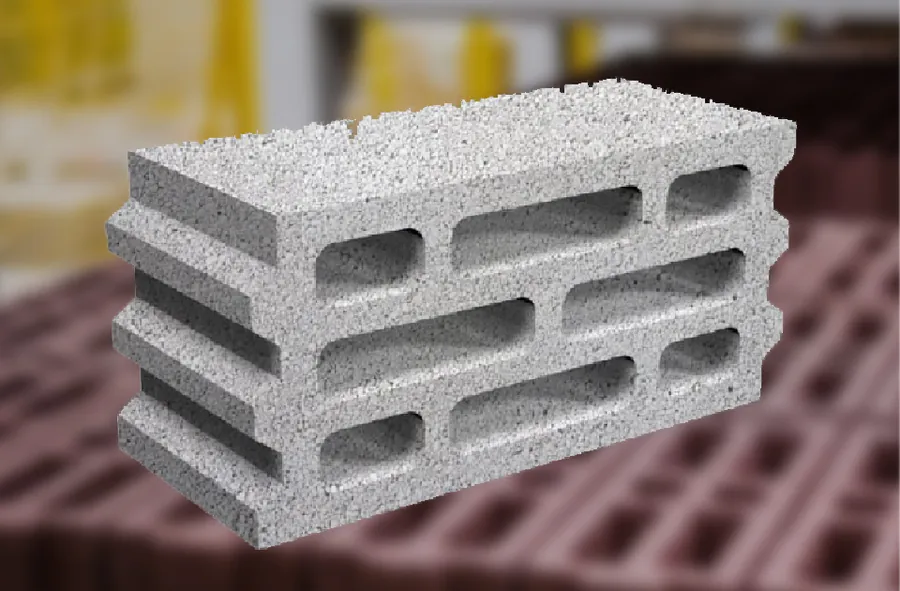
Guide to Building Walls with Pumice Blocks: From Selection to Render
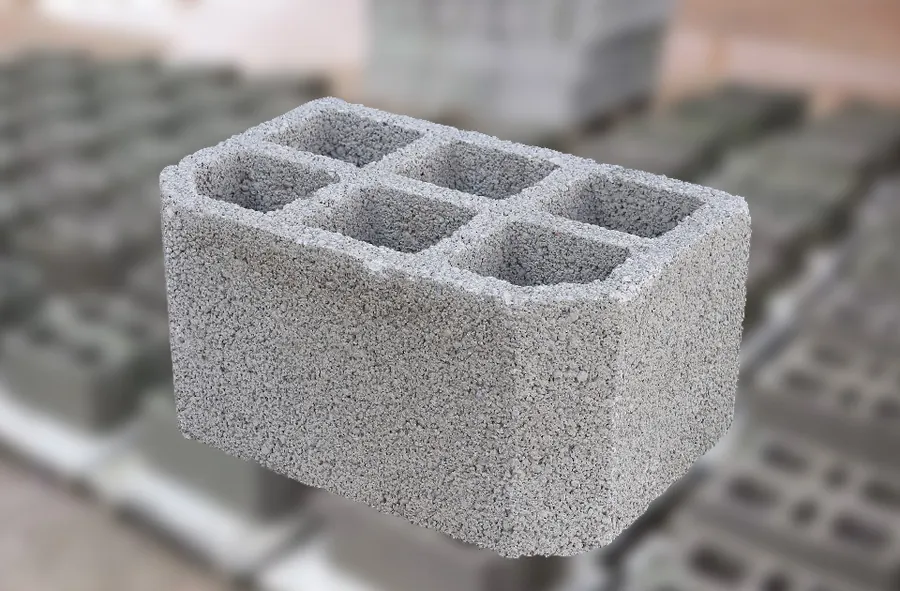
What Is a Hollow Block Floor System, and Where and How Is It Built?
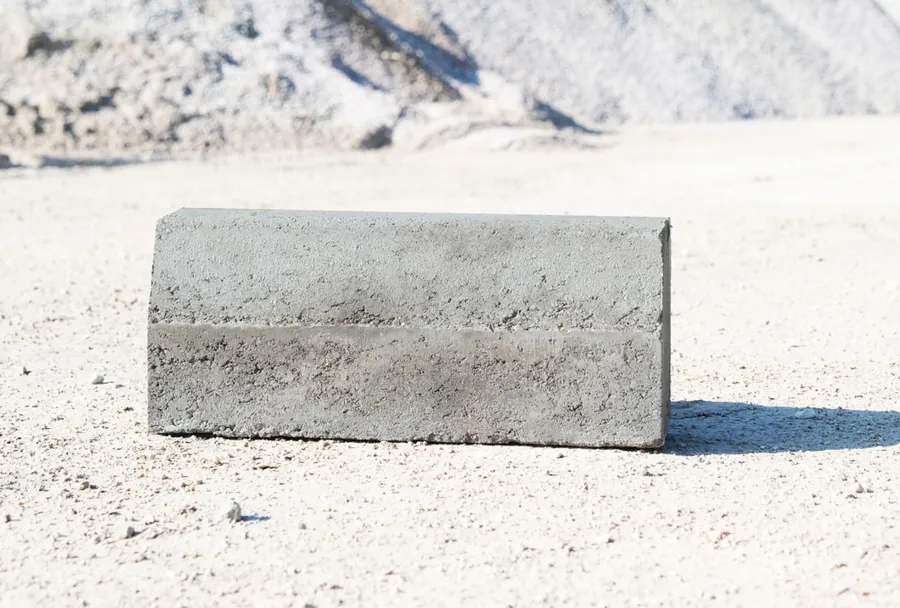
Kerb Stone Types and Laying Rules: What to Watch on Site
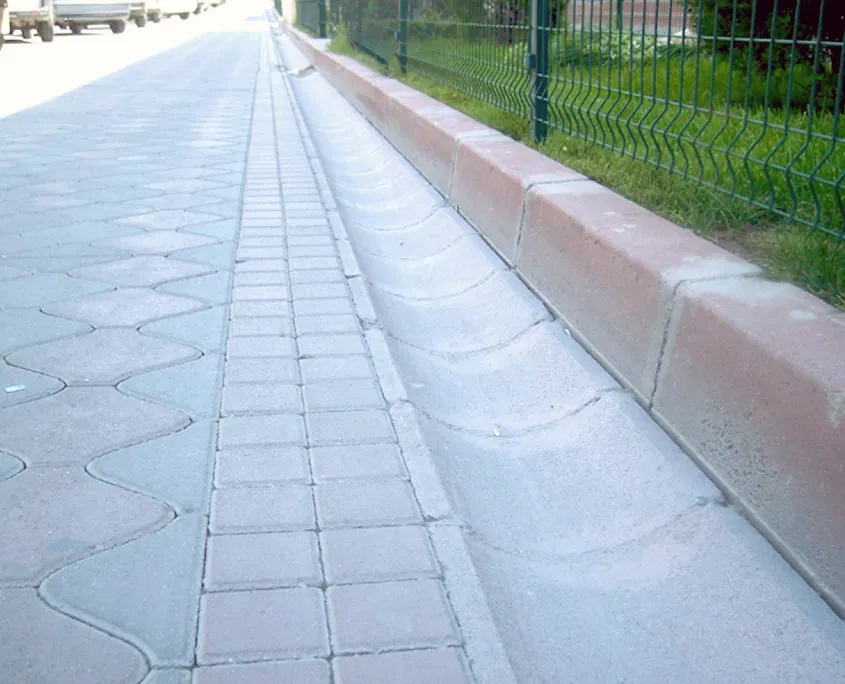
Stormwater Drainage: Channels, Grating Classes and Ditch Elements
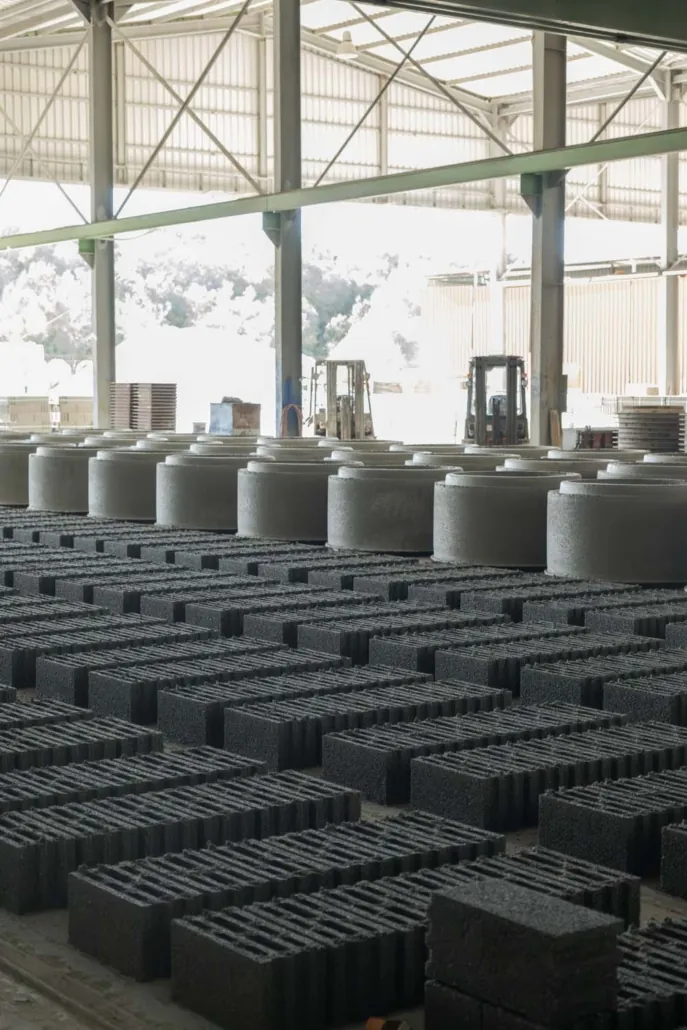
Manhole (Inspection Chamber) Elements and Installation: From Base to Cover
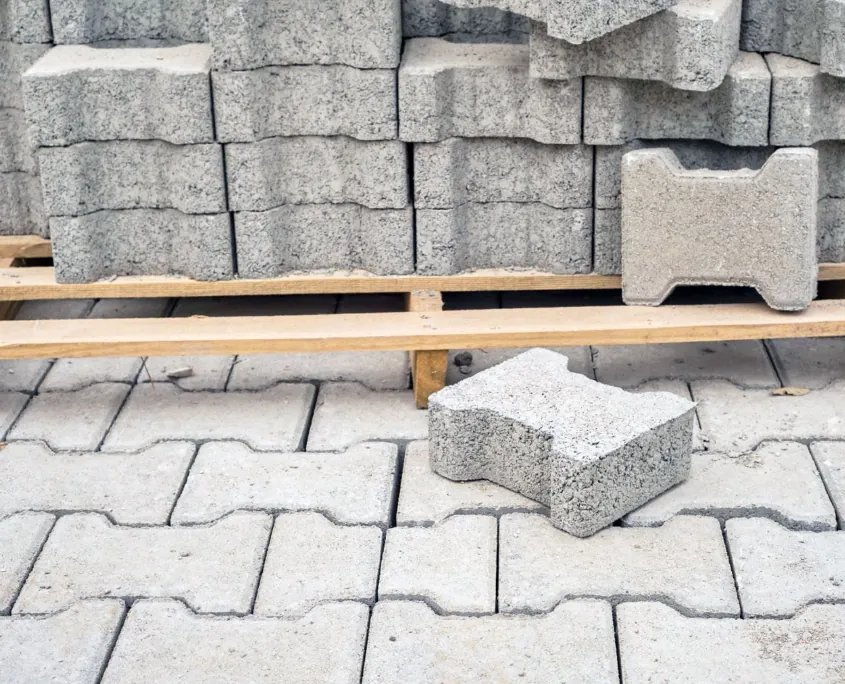
Laying Interlocking Pavers: Ground Preparation, Sand Bed and Joints
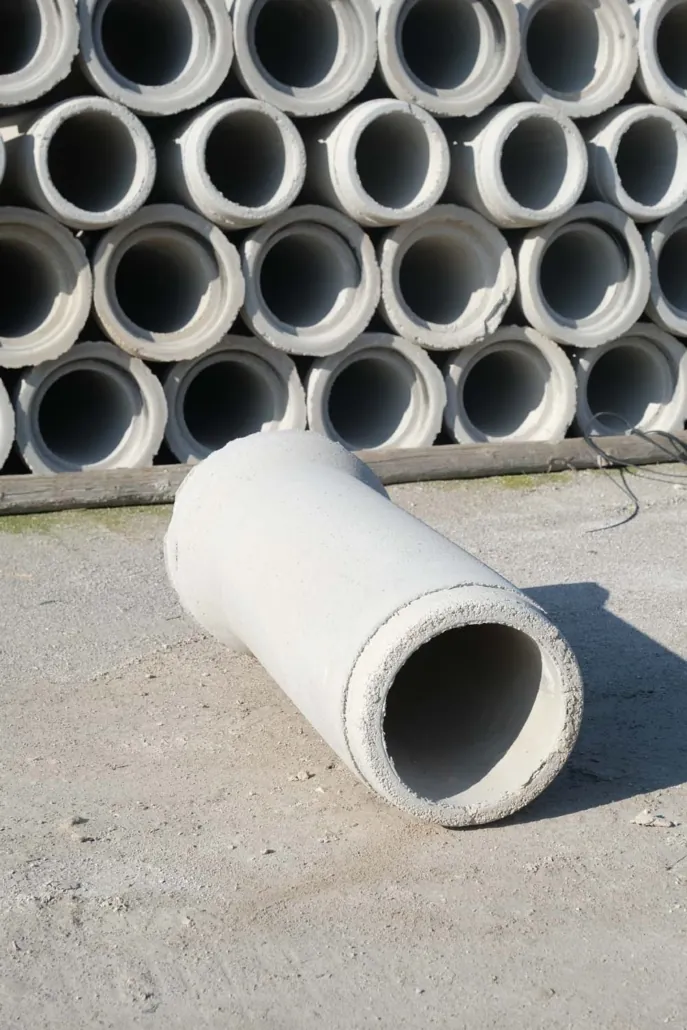
Laying Concrete Pipes: Trench, Bedding, Seals and Joints
Let us prepare a product and delivery plan for your project
Contact our plant management for stock availability, size options and a price quote. Same-day delivery from our facility at the centre of the Milas–Bodrum axis to Milas, Bodrum, Muğla, Didim and the surrounding areas.